
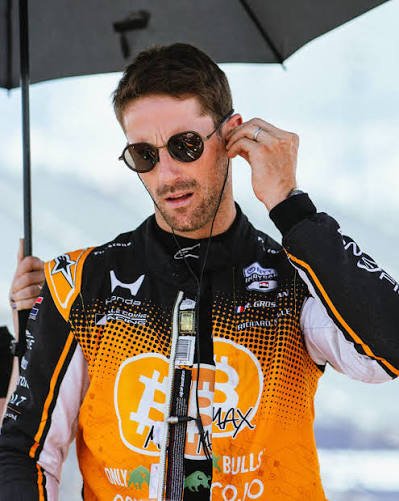
During the opening lap of the 2020 Bahrain Grand Prix, Romain Grosjean was involved in one of the most dramatic crashes in modern Formula 1 history.
After making contact with another car, Grosjean’s Haas struck a steel barrier at roughly 221 km/h (137 mph). The impact registered approximately 67G, meaning his body briefly experienced a force about 67 times the force of gravity. The car pierced the barrier, split into two sections, and erupted into a massive fireball fueled by ruptured fuel lines.
Despite the violence of the crash, Grosjean survived. Trapped in the flames for around 27 seconds, he managed to free himself and climb over the barrier with the help of Formula 1 medical car driver Alan van der Merwe and FIA medical delegate Ian Roberts, who rushed to the scene within seconds.
Several layers of modern safety technology combined to save his life. The Halo cockpit protection device helped shield his head during the initial impact, while the survival cell of the chassis remained intact. His fire-resistant racing suit, gloves, helmet, and other protective gear gave him precious time to escape the intense flames before suffering more than burns to his hands.
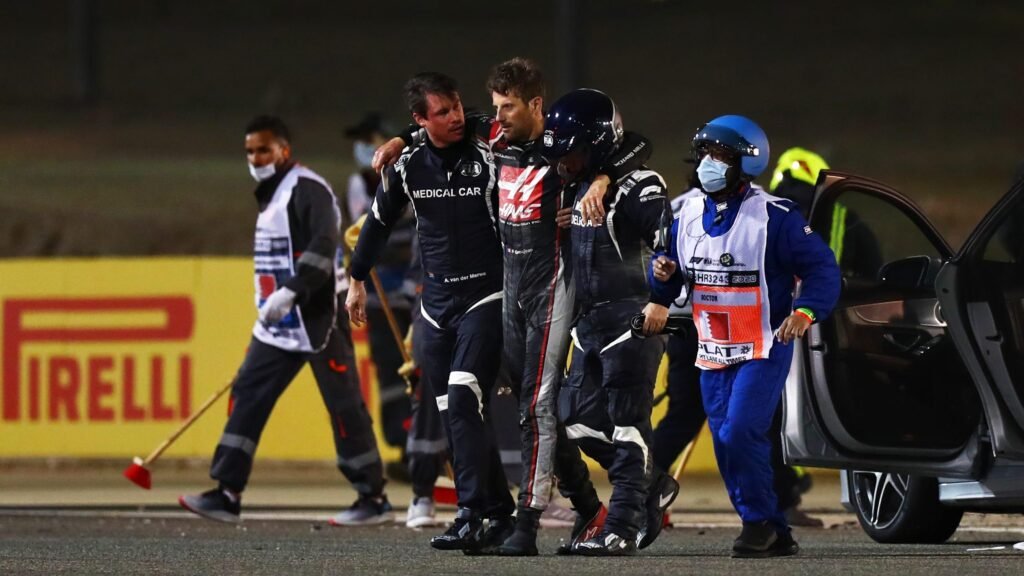
The accident became one of the clearest demonstrations of how decades of Formula 1 safety improvements have transformed the sport. Many engineers, drivers, and medical experts agreed that a similar crash in earlier eras of racing would likely have been fatal.
Although Grosjean’s Formula 1 career ended shortly afterward, his return to competitive motorsport was remarkably quick. After recovering from his injuries, he began racing in the IndyCar Series in 2021, proving that he had made an extraordinary physical and mental recovery.