
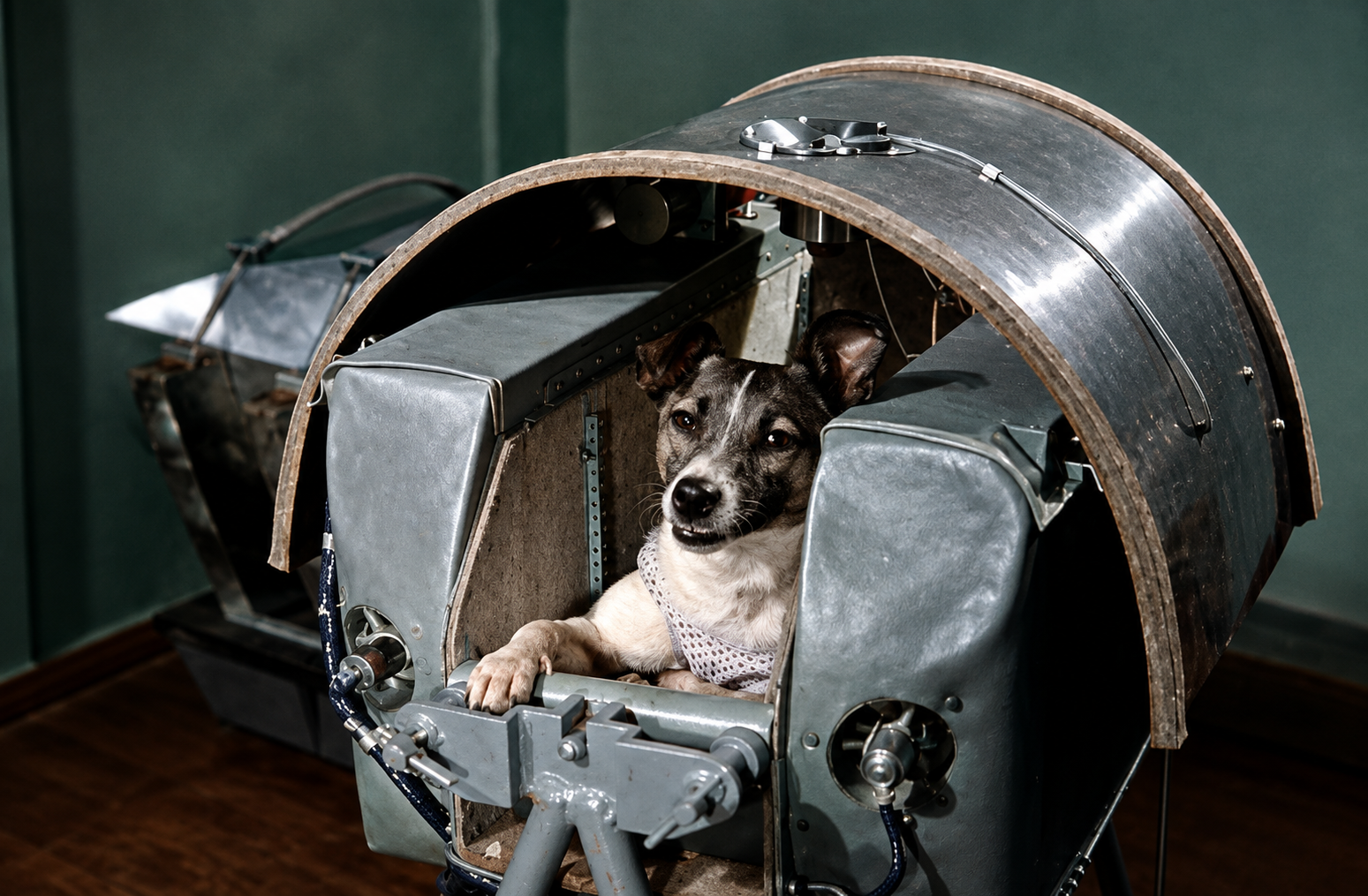
On November 3, 1957, the Soviet space program launched Laika, a stray dog from Moscow, aboard the spacecraft Sputnik 2.
Laika became the first living creature to orbit Earth, a landmark achievement during the early Space Race. The mission was designed to study how a living organism would respond to launch, microgravity, and orbital flight before humans attempted similar journeys.
At the time, the Soviet Union announced that Laika had survived for several days before being humanely euthanized. Decades later, officials revealed that she had actually died within hours of launch due to overheating and stress caused by a failure in the spacecraft’s thermal control system.
Although Laika did not survive, the mission provided valuable biomedical data that contributed to later Soviet spaceflights involving animals and, ultimately, to Yuri Gagarin‘s historic orbital mission in 1961.
Today, Laika is remembered as one of the most significant animals in the history of space exploration. Memorials and monuments honor her contribution, while her mission also sparked lasting ethical discussions about the use of animals in scientific research.