
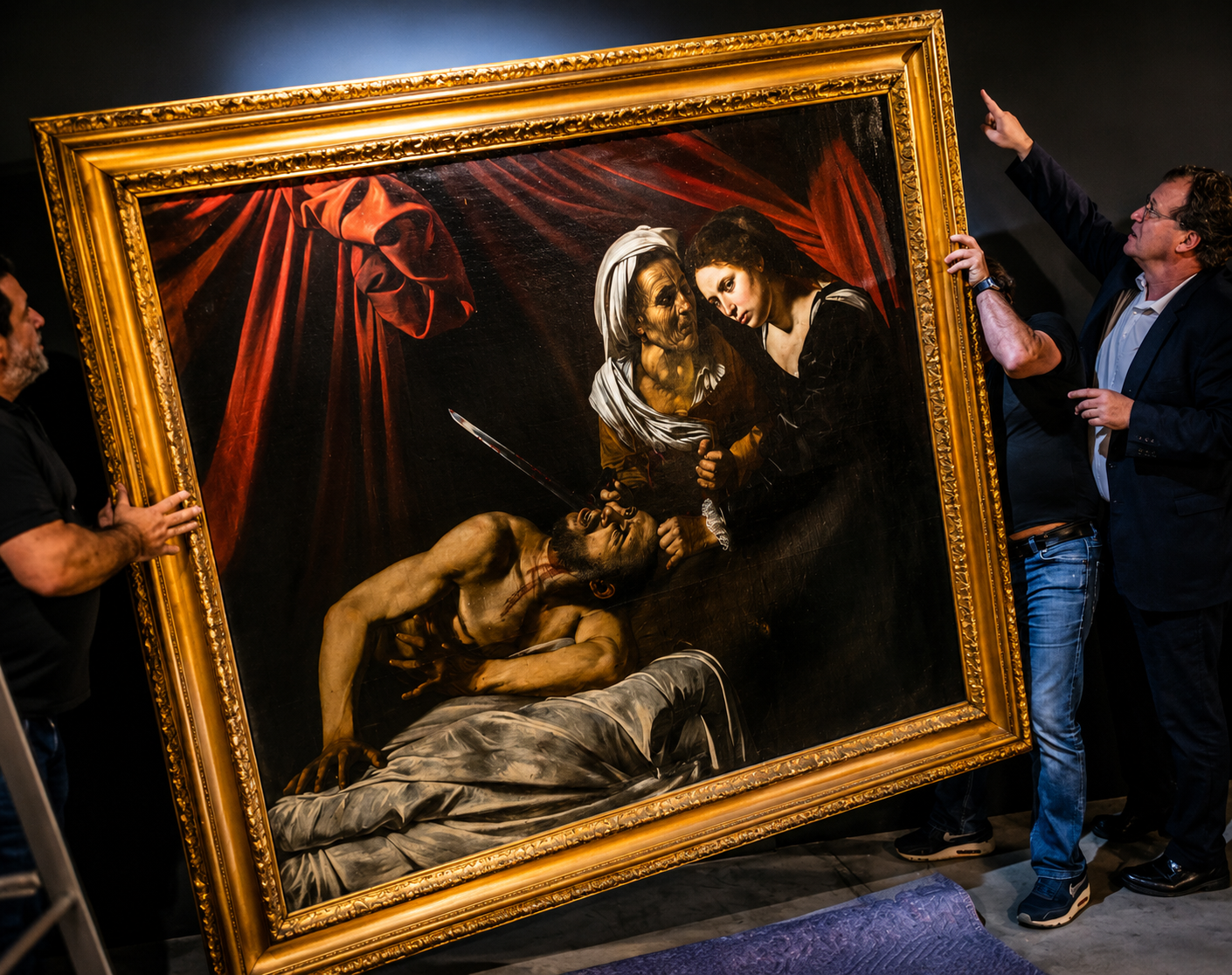
In 2014, while renovating a house in Toulouse, homeowners made an astonishing discovery. Hidden behind a partition in a sealed attic was a dramatic painting depicting the biblical story of Judith beheading Holofernes. The artwork had likely remained unseen for decades, surviving unnoticed through generations.
Experts soon realized the painting could be far more than an ordinary old canvas. Some of the world’s leading art historians argued it might be an authentic work by Michelangelo Merisi da Caravaggio, painted around 1607, during the artist’s final years. Others believed it was the work of Louis Finson, a gifted follower of Caravaggio who copied and preserved several of the master’s lost works.
The discovery ignited years of fierce debate in the art world. If genuine, it would rank among the most significant rediscoveries of a Caravaggio in modern history. Before it could be offered at public auction in 2019, the painting was sold privately to an anonymous collector, leaving its exact purchase price undisclosed.
To this day, scholars remain divided over its authorship. Whether it is an undiscovered Caravaggio or an exceptional work by Louis Finson, the painting is widely regarded as one of the most important art discoveries of the 21st century—proof that remarkable masterpieces can still emerge from the most unexpected places.