
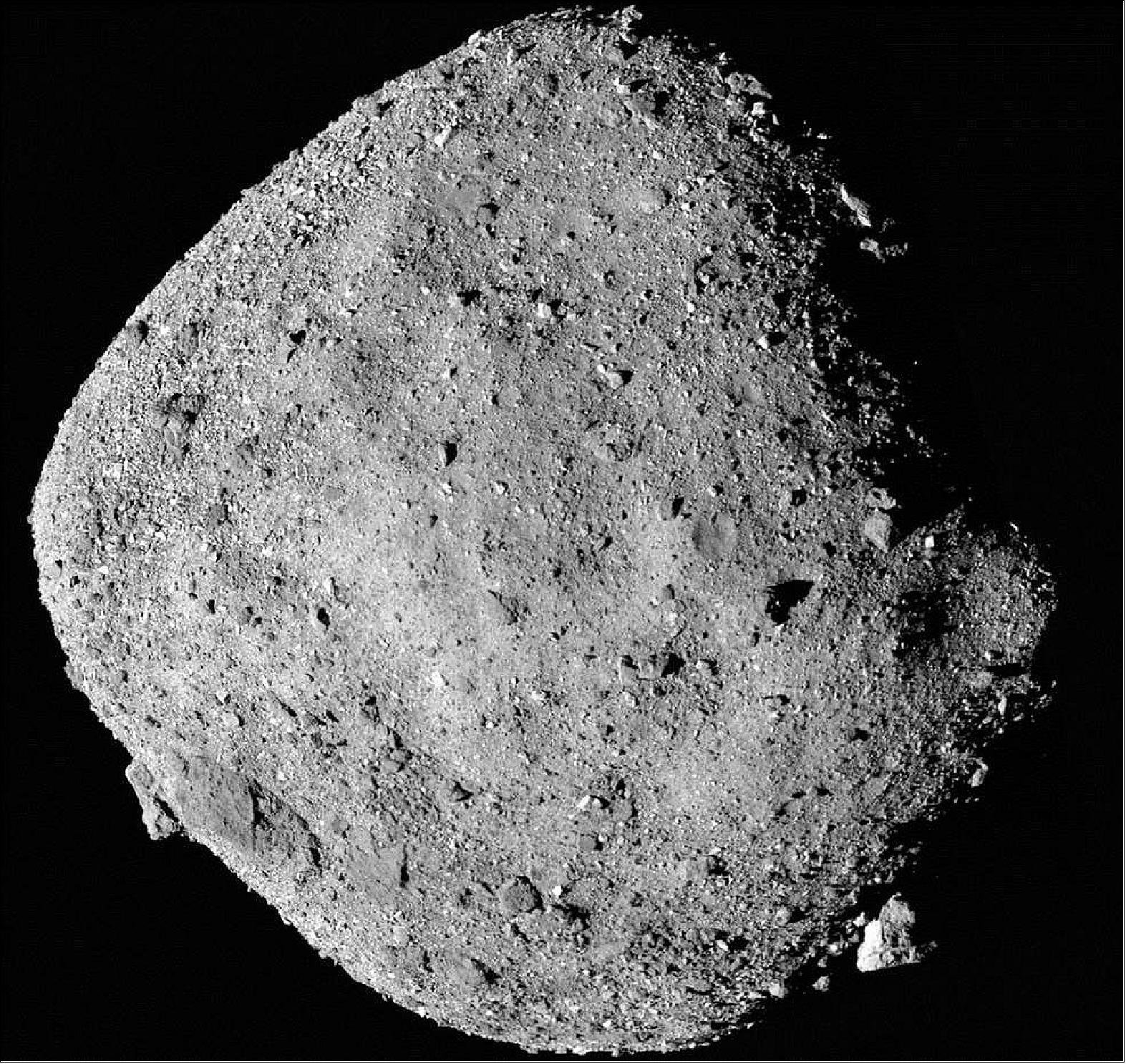
In 2016, NASA launched one of its most ambitious planetary science missions: OSIRIS-REx. Its destination was 101955 Bennu, a carbon-rich asteroid believed to contain some of the oldest and most primitive material in the Solar System.
After traveling more than 2 billion kilometers (1.2 billion miles), the spacecraft reached Bennu in 2018 and spent nearly two years mapping its rugged surface in extraordinary detail. In 2020, OSIRIS-REx briefly touched the asteroid for just a few seconds, firing a burst of nitrogen gas that stirred up rocks and dust before collecting far more material than scientists had expected. In fact, so much sample was gathered that part of the collection container couldn’t fully close, forcing NASA to quickly begin the return journey to prevent any precious material from escaping.
On September 24, 2023, the sample capsule parachuted safely into the Utah Test and Training Range in the United States. Inside were 121.6 grams (4.29 ounces) of asteroid material—NASA’s largest-ever asteroid sample return. Scientists believe Bennu’s rocks have remained largely unchanged for 4.5 billion years, making them a time capsule from the birth of the Solar System.
Early analysis has already revealed water-bearing clay minerals, abundant carbon, and organic molecules—the chemical building blocks associated with life. While these findings don’t prove life existed on Bennu, they strengthen the idea that ancient asteroids may have helped deliver water and essential ingredients to the young Earth, making missions like OSIRIS-REx crucial to understanding our own origins.