
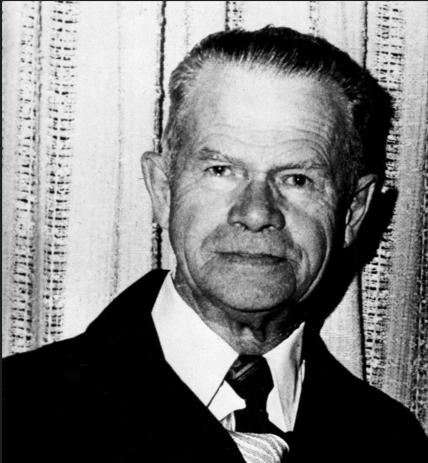
On August 30, 1976, Hanford worker Harold McCluskey was working inside the Americium Recovery Facility in Washington State when a radioactive sample suddenly exploded.
The accident tore away his protective face mask and showered him with fragments contaminated with Americium-241, a highly radioactive material. McCluskey received what was described as the largest recorded human contamination with americium. His contamination was so extreme that, according to Guinness World Records, radiation detectors could detect him from approximately 15 meters (50 feet) away.
When he arrived at the hospital, doctors faced an extraordinary problem: they weren’t simply treating someone who had been exposed to radiation. Radioactive material was actually contaminating his body. McCluskey underwent extensive treatment and decontamination. At one point, he was so contaminated that hospital staff reportedly had to remove him from the ambulance using remote controls to minimize exposure.
Yet somehow, he survived. Even more astonishingly, McCluskey didn’t die weeks or months later. He was eventually discharged from the hospital in 1977 and returned home, although some friends and acquaintances reportedly avoided him because they feared radiation contamination.
McCluskey lived for another 12 years after the accident. He died in 1987, and Guinness records that his death was caused by coronary heart disease rather than a radiation-related illness.