
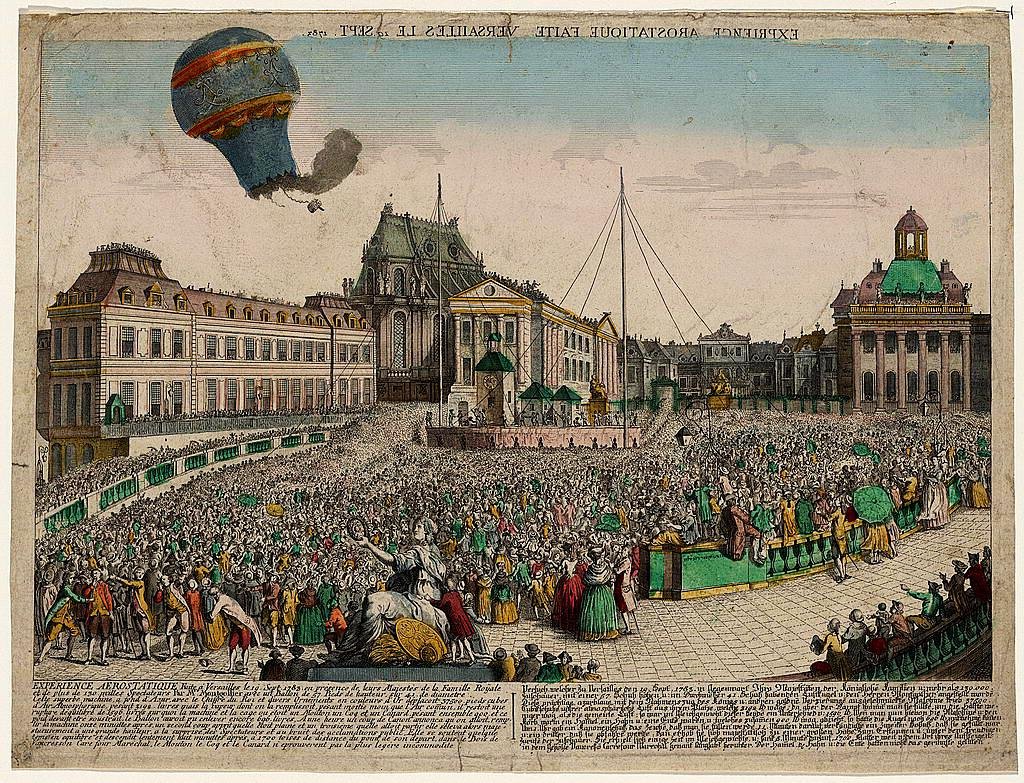
Before humans ever traveled in a balloon, three animals became the first living creatures to fly in a human-made aircraft.
On September 19, 1783, the Montgolfier brothers demonstrated their hot-air balloon at Versailles, France, in front of King Louis XVI and the royal family. The experiment had an important purpose: scientists wanted to determine whether living creatures could survive being carried high into the atmosphere before risking human lives.
Inside a wicker basket beneath the balloon were three highly unusual passengers: a sheep, a duck and a rooster. The sheep was reportedly named Montauciel, meaning roughly “climb to the sky.”
The balloon rose to approximately 600 meters (about 2,000 feet) and traveled around 3.5 kilometers before descending after the balloon was damaged. When the basket reached the ground, the animals were examined—and remarkably, all three were alive.
The experiment gave the Montgolfiers and their supporters confidence that humans could potentially survive a balloon ascent. Only weeks later, Jean-François Pilâtre de Rozier made tethered ascents, and on November 21, 1783, he and François Laurent d’Arlandes made the first free human flight in a Montgolfier balloon.
The Smithsonian’s National Air and Space Museum describes the sheep, duck and rooster as the first living creatures to fly, while noting that their successful flight helped demonstrate that balloon travel could be safe for humans.
So before pilots, astronauts or even human balloonists became pioneers of flight, a sheep, a duck and a rooster became aviation’s first passengers.