
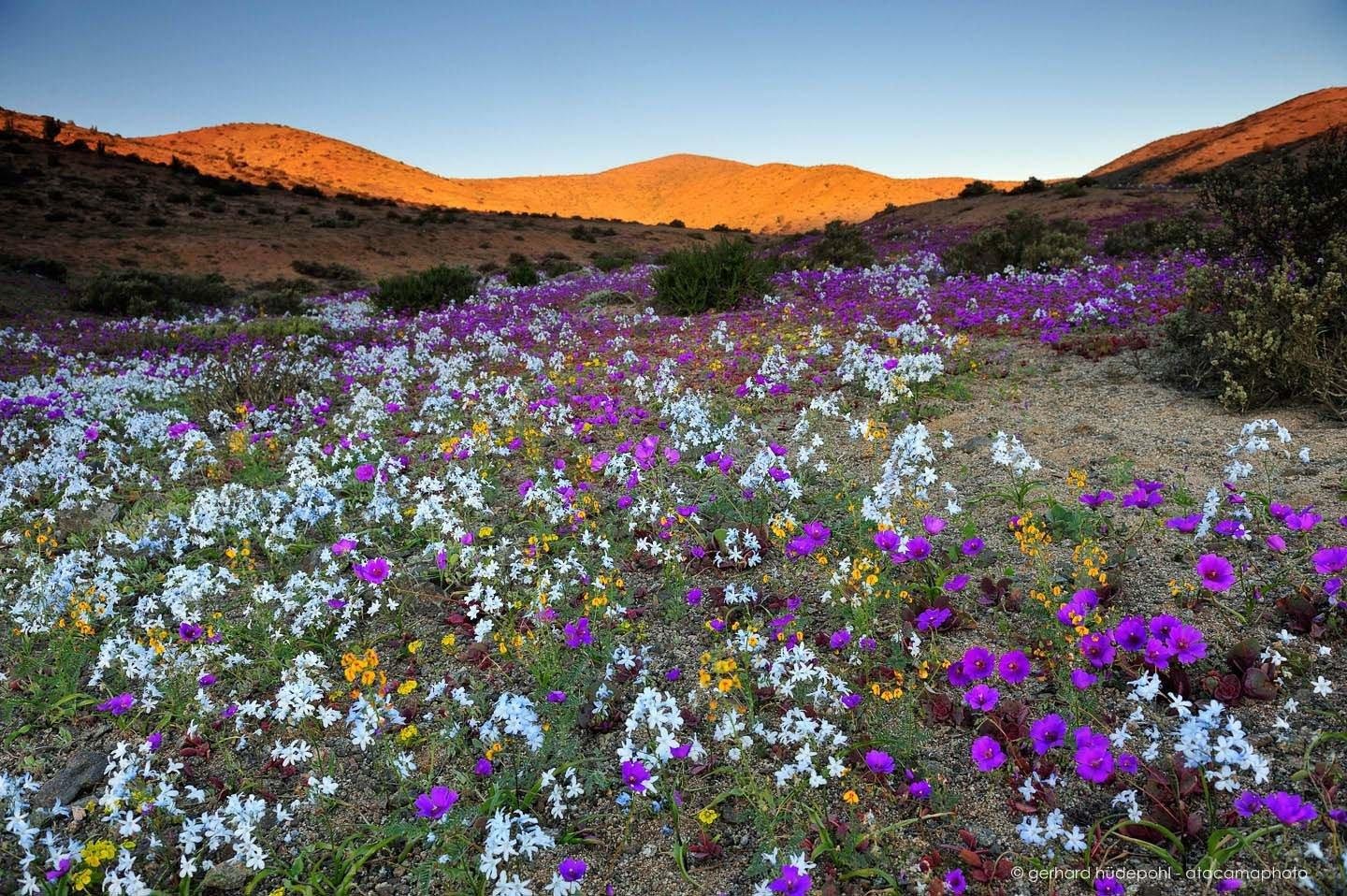
For most of the year, the Atacama Desert looks almost lifeless. Stretching more than 1,600 kilometers (1,000 miles) along Chile’s Pacific coast, it is widely regarded as the driest non-polar desert on Earth, with some weather stations recording years—or even decades—without measurable rainfall. Its harsh, Mars-like landscape is so extreme that NASA has used parts of the Atacama to test equipment designed for future missions to the Red Planet.
But every few years, nature produces an astonishing transformation.
After unusually heavy rainfall, millions of dormant seeds hidden beneath the sand awaken almost simultaneously. Within weeks, vast stretches of the desert burst into brilliant shades of pink, purple, yellow, white, and blue, creating the spectacular phenomenon known as Desierto Florido, or the Flowering Desert. More than 200 species of native plants, including lilies, mallows, and “pata de guanaco” flowers, can appear, attracting butterflies, bees, birds, and other wildlife that remain scarce during dry years.
The bloom usually lasts only a few weeks, making it one of the world’s most fleeting natural spectacles. Because the timing depends on rare rainfall patterns, no two flowering seasons are exactly alike. Scientists continue studying the remarkable seeds that can survive buried in the soil for years before springing to life, making the Atacama a powerful reminder that even Earth’s harshest landscapes can conceal extraordinary resilience and beauty.