

Winning an Olympic gold medal is the ultimate dream for many athletes, but despite its name, a modern Olympic gold medal is not made entirely of gold. Under the rules of the International Olympic Committee, gold medals are made primarily of silver and are coated with a thin layer of at least 6 grams of pure gold. The vast majority of each medal’s weight comes from sterling silver, with the gold plating providing its iconic appearance.
The last time Olympic champions received solid gold medals was at the 1912 Summer Olympics in Stockholm. As the Olympic Games grew in size and the price of gold increased, producing solid gold medals became prohibitively expensive. Since then, organizers have continued the tradition of awarding gold-colored medals while using silver as the primary material.
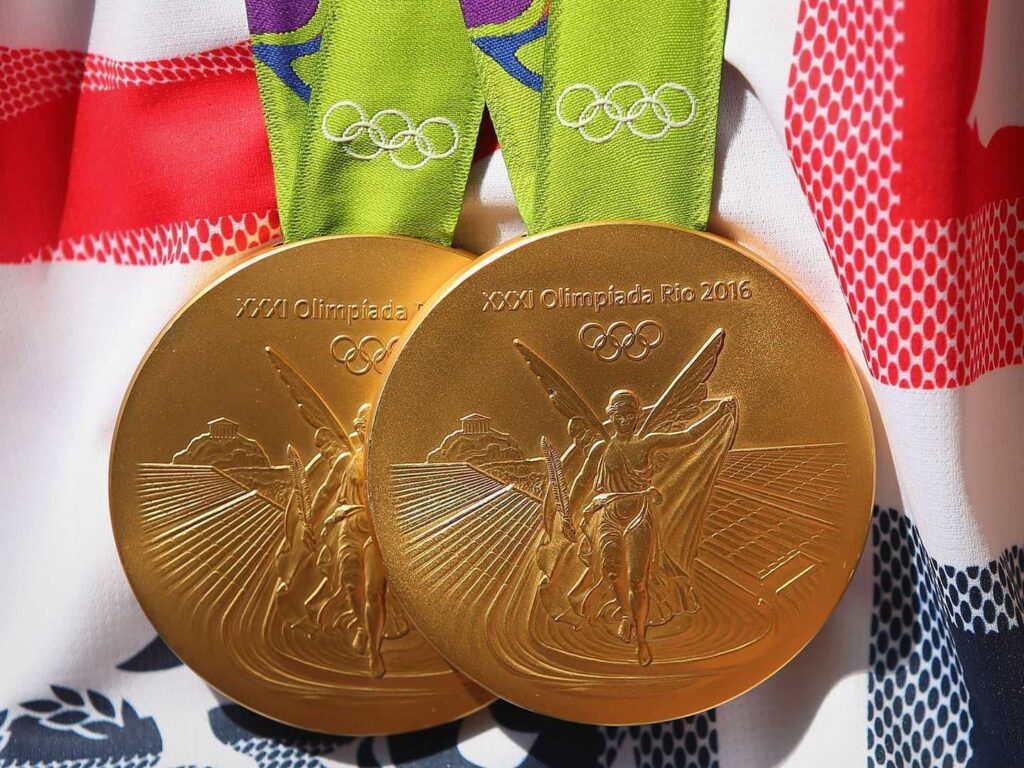
Although the intrinsic metal value of a modern Olympic gold medal is only a fraction of what many people imagine, its true worth extends far beyond the precious metals it contains. Olympic medals often become priceless personal treasures, representing years of sacrifice, training, and dedication. In some cases, athletes have chosen to auction their medals for charity or private collectors have paid hundreds of thousands of dollars for medals associated with historic performances, making their collectible value far greater than the value of the gold and silver alone.
Every Olympic host city also designs its own medals, meaning each edition of the Games has a unique appearance while still following the IOC’s material requirements. As a result, every gold medal tells two stories: one through its design, celebrating the host nation, and another through the athlete who earned it through extraordinary achievement.