
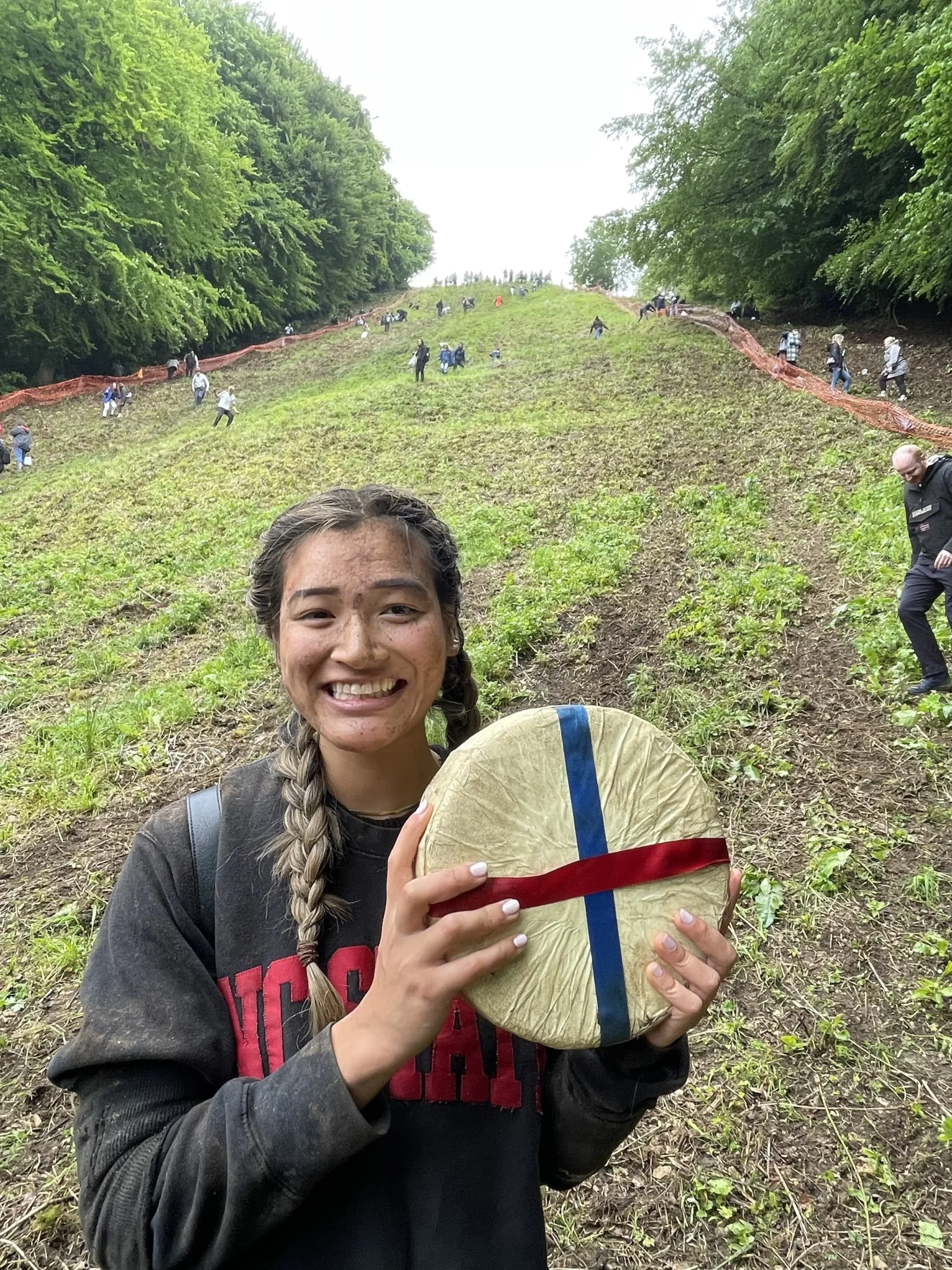
One of Britain’s oldest and most eccentric sporting traditions made history in 2026 when, for the first time in the event’s recorded history, none of the men’s races at the Cooper’s Hill Cheese-Rolling and Wake were won by a British competitor. Held each spring near Cooper’s Hill, the event has been celebrated for centuries and is believed to date back at least 600 years, drawing competitors from around the world to chase a rolling wheel of cheese down one of England’s steepest hills.
Leading the international takeover was Tom Kopke, who captured the first men’s race for the third consecutive year. Chasing the traditional 7-pound (3.2 kg) Double Gloucester cheese, Kopke once again managed to stay ahead of dozens of competitors as they tumbled down the notoriously dangerous 1:2 gradient hillside, successfully defending the title he first won in 2024.
The second men’s race produced another milestone when Niels Wennemars, aged 21, became the first Dutch winner in the event’s long history. His victory further highlighted the increasingly international nature of the competition, which now attracts participants from across Europe, North America, Australia, and beyond.
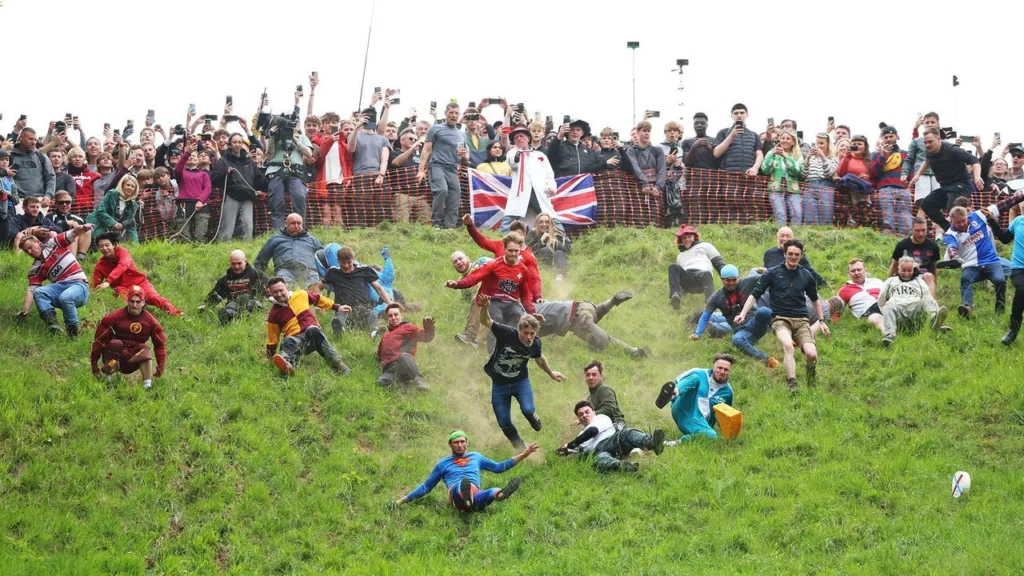
Despite its global popularity, the Cheese-Rolling and Wake remains an informal event with no official governing body. Participants sprint—or more accurately, tumble—after a wheel of cheese that can reach speeds of up to 80 mph (130 km/h). The hill’s extreme slope often causes competitors to lose their footing almost immediately, resulting in dramatic falls, collisions, and frequent injuries. Broken bones, dislocated shoulders, concussions, and countless cuts and bruises have become part of the event’s legendary reputation.
Among those competing once again was local icon Chris Anderson, widely regarded as the sport’s greatest competitor. A 23-time champion and Guinness World Record holder for the most Cheese-Rolling victories, Anderson was unable to reclaim the title from the new generation of international challengers, symbolizing a changing era for one of England’s most famous traditions.