
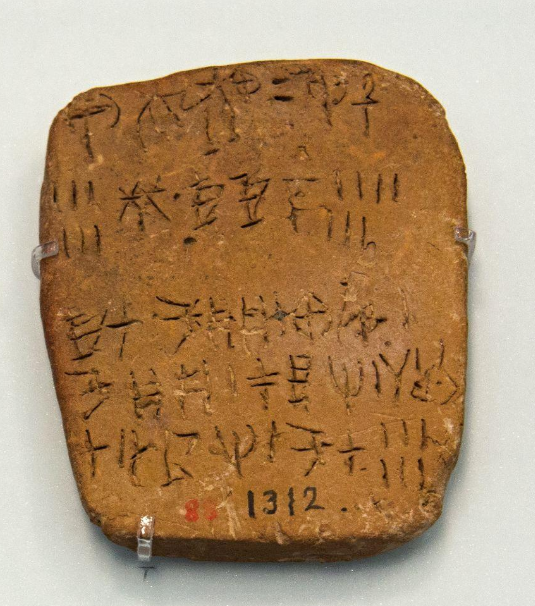
For more than a century, Linear A has remained one of archaeology’s greatest unsolved mysteries. Used by the Minoan civilization between roughly 1800 and 1450 BC, the script has resisted every serious attempt at translation. Unlike Linear B>, which was deciphered in 1952 by Michael Ventris and John Chadwick, Linear A has remained unreadable because the language it records is still unknown.
In June 2026, self-taught programmer and AI engineer Tom Di Mino announced that he believes he has made a major breakthrough. Based in New York’s Hudson Valley, Di Mino says he spent seven years studying previous research before beginning an intensive decoding effort in early 2026. Drawing on his knowledge of Attic Greek, Latin, Sanskrit, and Ugaritic, he built custom software using AI-assisted programming tools to compare thousands of inscriptions from the two largest digital archives of Linear A texts.
According to Di Mino, his key insight came while examining inscriptions recovered from five Minoan sanctuary sites. He argues that Linear A may not represent an isolated Minoan language as many scholars have assumed. Instead, he proposes that it records an early Semitic language, related to the language family that later produced Hebrew, Arabic, and Phoenician. Based on this hypothesis, he says he has identified probable readings for about 40 signs and compiled a preliminary 408-word lexicon.
The announcement has generated significant interest within the archaeological community, but experts are emphasizing that the claim has not been verified. Di Mino’s research is reportedly being reviewed by specialists, including Ester Salgarella, who is affiliated with both the University of Cambridge and Rutgers University. Scholars note that several previous researchers have proposed Semitic origins for Linear A—including theories dating back to the 1950s—but none has gained broad acceptance after detailed examination.