
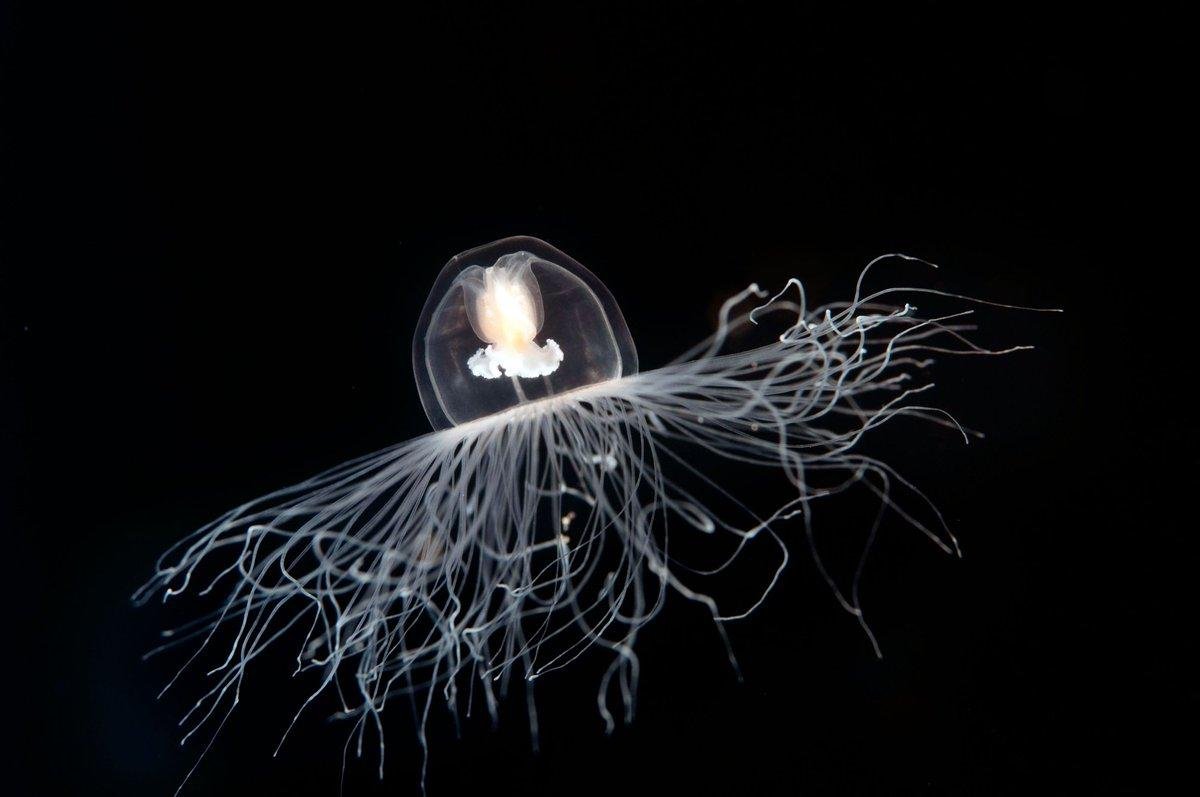
Most animals follow a one-way journey through life: birth, growth, reproduction, aging, and death. But a tiny jellyfish called Turritopsis dohrnii has developed a remarkable biological trick that allows it to reverse that journey.
When the animal is injured, starving, or under severe environmental stress, its adult body can undergo a process known as transdifferentiation. Instead of continuing toward death, the jellyfish can transform specialized adult cells into different cell types. Its bell shrinks, its tentacles disappear, and the animal eventually settles onto a surface.
Then something extraordinary happens. The jellyfish can revert to its earlier polyp stage—essentially returning to a juvenile phase of its life cycle. From there, it can develop into an adult jellyfish again.
Even more remarkable, this process can potentially be repeated multiple times.
That is why Turritopsis dohrnii became known as the “immortal jellyfish.” The term doesn’t mean the creature cannot die. A predator can still eat it, disease can kill it, and environmental conditions can destroy it. Its unusual ability simply means that aging itself doesn’t necessarily have to be the end of its life cycle.
Scientists are particularly interested in this process because it offers a rare opportunity to study cellular reprogramming and regeneration.