
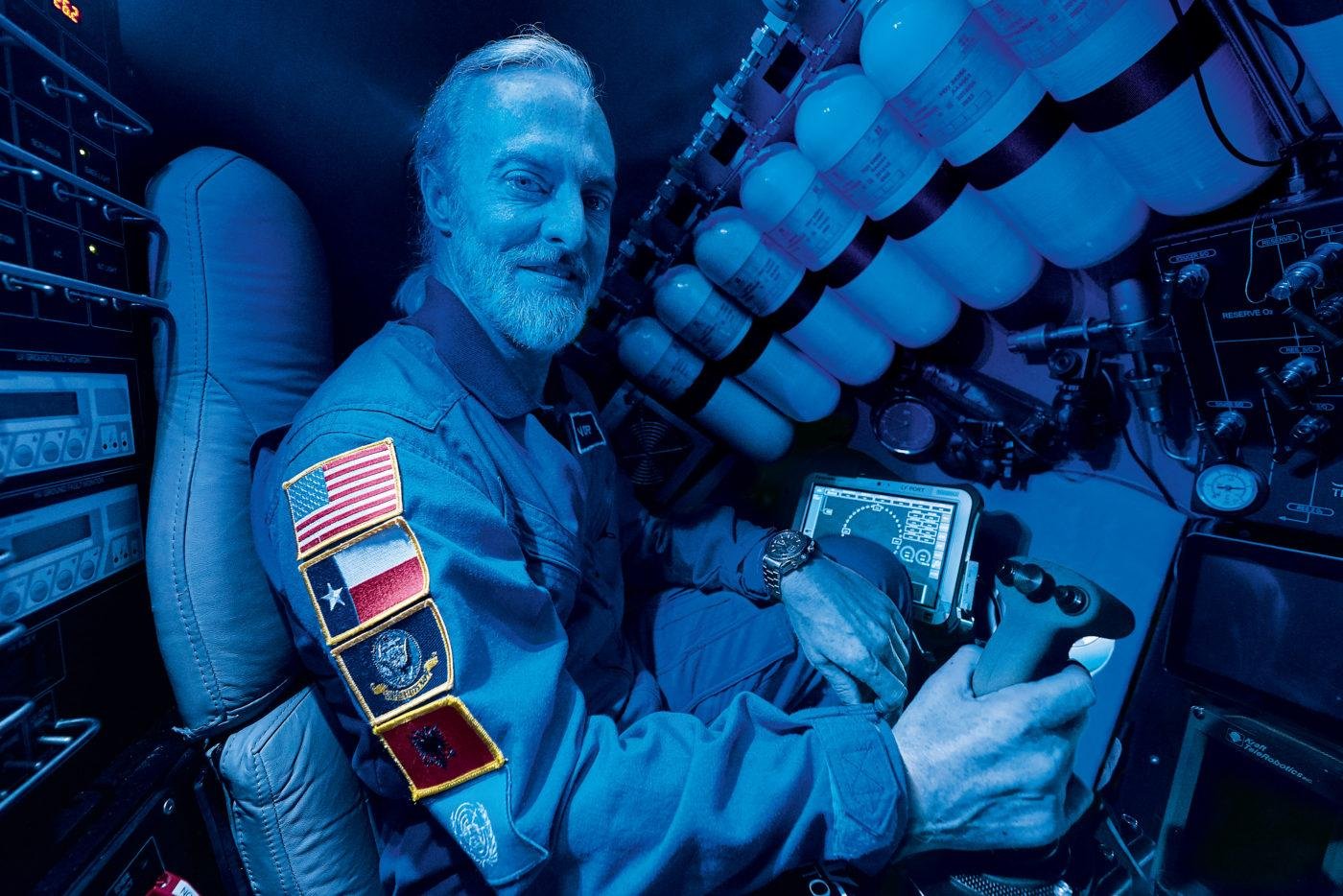
In 2019, American explorer Victor Vescovo accomplished a feat that required conquering two of Earth’s most extreme environments.
He had already climbed Mount Everest, reaching the highest point on Earth’s surface at approximately 8,849 meters (29,032 feet) above sea level.
But Vescovo wanted to go in the opposite direction.
As part of his ambitious Five Deeps Expedition, he piloted a specially designed submersible called the Limiting Factor into the Mariana Trench.
On May 13, 2019, Vescovo reached Challenger Deep, the deepest known point in Earth’s oceans. The descent took him nearly 11 kilometers below the surface.
Down there, the pressure is more than 1,000 times atmospheric pressure at sea level.
A human being exposed directly to that environment would be crushed almost instantly. Vescovo could survive only because he was enclosed inside a specially engineered pressure-resistant sphere.
His expedition was particularly remarkable because he personally experienced both extremes.
At Everest, he faced freezing temperatures, dangerously thin air, altitude sickness, and exhaustion.
At Challenger Deep, he encountered total darkness, near-freezing water, and enormous pressure.
Guinness World Records recognizes Vescovo as the first person to reach both the highest and deepest points on Earth.
The achievement also formed part of the Five Deeps Expedition, during which his team visited the deepest point in each of the world’s five oceans.
From the summit of Everest to the bottom of the Mariana Trench, Vescovo explored environments separated by almost 20 kilometers of vertical distance.
One human being had stood at Earth’s highest natural point—and then personally descended to its deepest known point.