
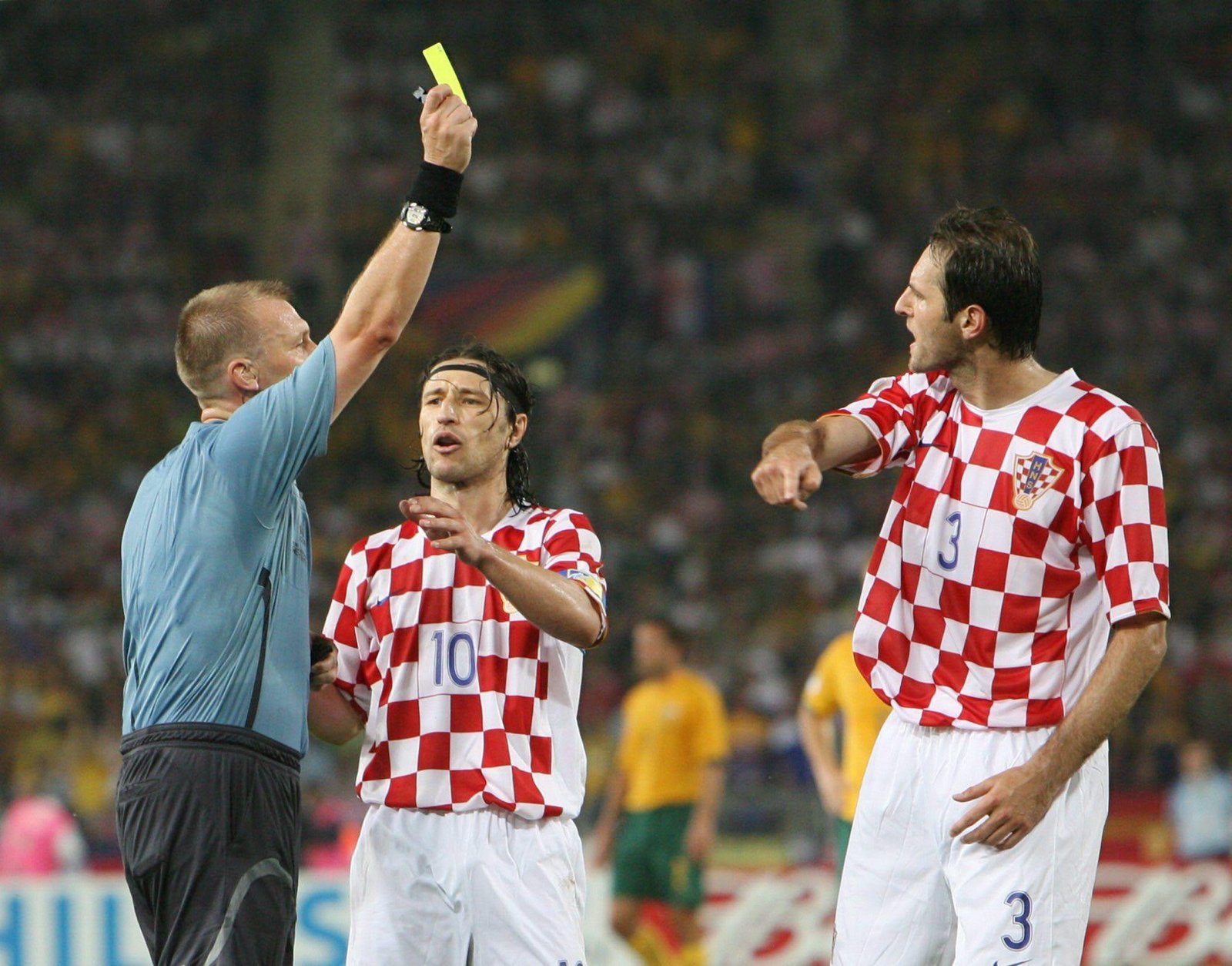
During the 2006 FIFA World Cup group-stage match between Croatia national football team and Australia national soccer team, English referee Graham Poll made one of the most astonishing mistakes ever seen on football’s biggest stage.
Croatian defender Josip Šimunić received his first yellow card in the second half. Minutes later, Poll showed him another yellow card, which under the Laws of the Game should have resulted in an immediate red card and dismissal. But incredibly, Šimunić remained on the pitch because Poll had accidentally recorded the caution incorrectly in his notebook.
The match continued until stoppage time, when Šimunić committed another foul. Poll reached for his pocket once more, produced a third yellow card, and only then realized the defender had already been booked twice. He finally showed the red card, ending one of the strangest officiating errors in World Cup history.
The bizarre incident overshadowed an exciting 2–2 draw that sent Australia into the knockout stage for the first time in its history. Poll later admitted it was the biggest mistake of his career, and FIFA did not appoint him to referee another match at the tournament.
Today, the “three yellow cards” incident is still cited in referee training courses as a reminder of the importance of concentration, accurate record-keeping, and teamwork between match officials.