
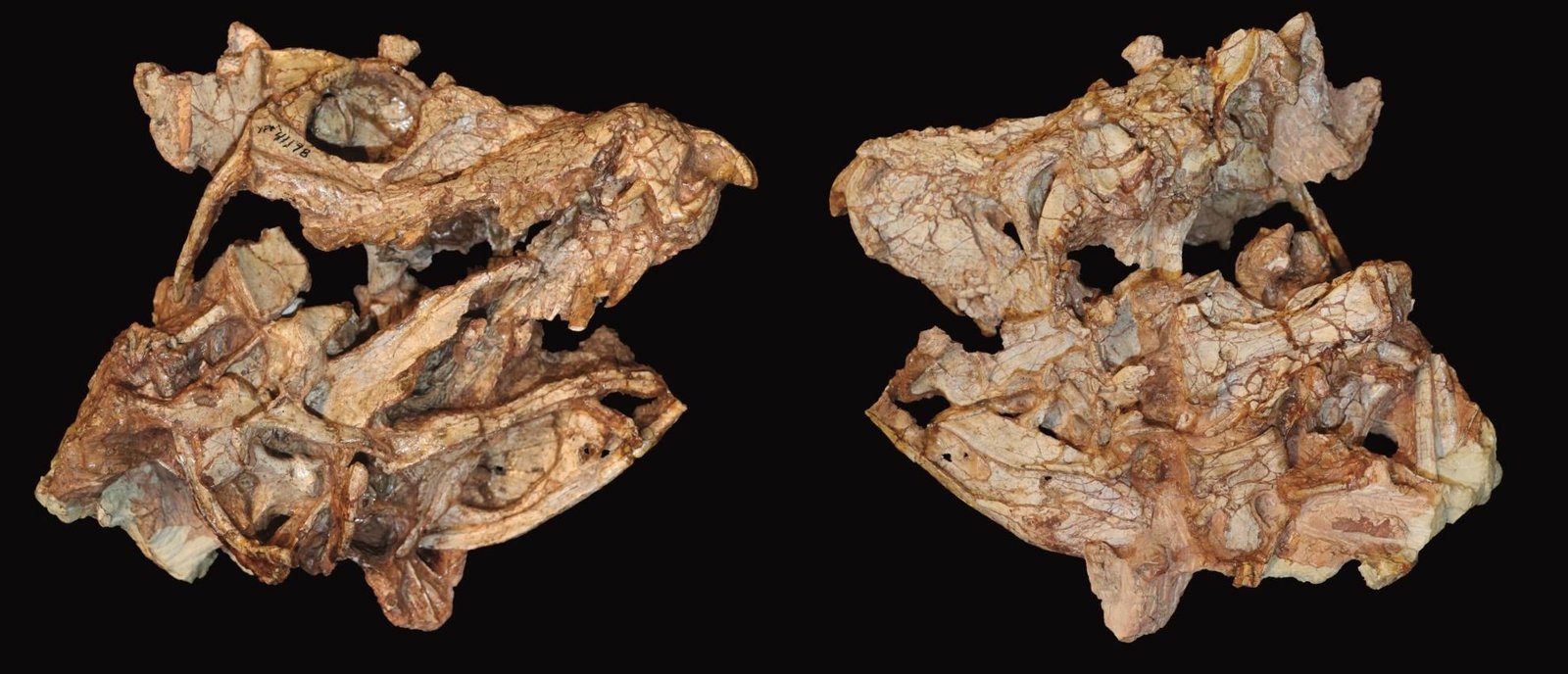
In 1948, paleontologists excavated a fossil at Ghost Ranch, one of North America’s most important Late Triassic fossil sites. The specimen was added to the collections of the Yale Peabody Museum, where it remained preserved but unstudied for decades.
Nearly 78 years later, researchers finally examined the fossil in detail and concluded it represented a previously unknown species. In 2026, they formally named it Eosphorosuchus lacrimosa, an early relative of modern crocodilians that lived about 210 million years ago during the Late Triassic.
Unlike today’s semi-aquatic crocodiles, Eosphorosuchus was a fully terrestrial predator. Roughly the size of a jackal, it possessed a reinforced skull, powerful jaw muscles, and a relatively short snout, suggesting it was adapted to chasing and capturing prey on land rather than ambushing animals in water.
The discovery also provided valuable insight into Triassic ecosystems. The fossil indicates that Eosphorosuchus lived alongside another croc-line predator, Hesperosuchus agilis, a more lightly built species with a longer, narrower snout. Finding evidence of both species in the same environment gives paleontologists a rare glimpse into how closely related predators may have occupied different ecological niches millions of years before the first true crocodiles evolved.
Researchers, including Bhart-Anjan Bhullar, noted that museum collections often contain overlooked specimens awaiting modern analysis. As new techniques and fresh perspectives emerge, fossils collected decades earlier can still transform our understanding of prehistoric life.