
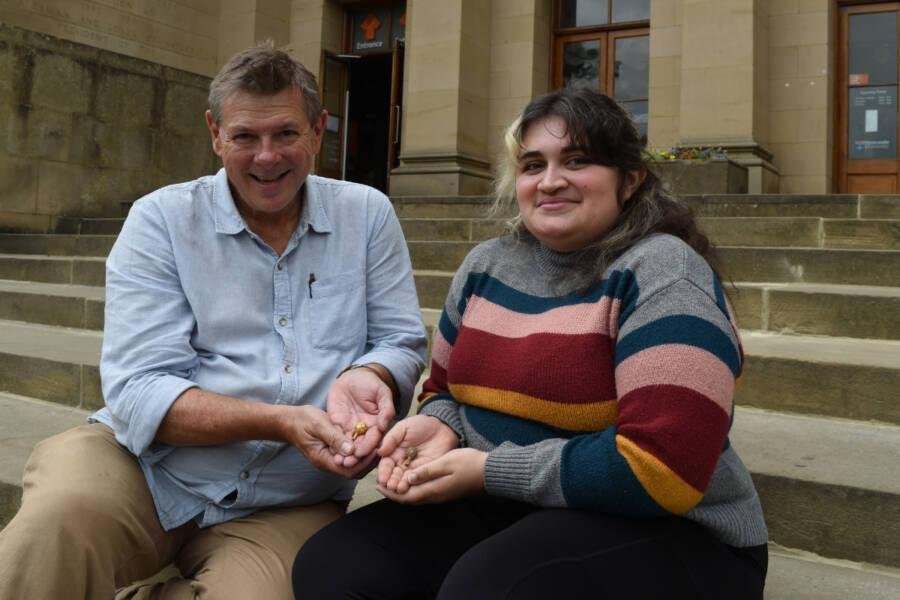
Imagine arriving at an archaeological excavation as a university student—and less than two hours later, uncovering a piece of gold that had been buried for more than 1,000 years.
That’s what happened to Yara Souza, a student at Newcastle University, during archaeological fieldwork in Northumberland in 2025. Souza was working at an excavation in Redesdale, alongside fellow students and professional archaeologists from North East Museums, when she noticed something unusual in the soil.
She had been working for only about 90 minutes.
The object turned out to be a rare piece of 9th-century gold, making the discovery an extraordinary piece of luck for someone still learning the fundamentals of archaeological excavation.
The find was later selected for the exhibition Treasure: Hidden, Lost, Found at the Great North Museum: Hancock in Newcastle, where it was displayed alongside other remarkable archaeological discoveries from northern Britain.
What makes the story so fascinating is the contrast between the object’s age and the circumstances of its discovery.
The gold had survived underground for roughly 1,200 years, through centuries of changing landscapes, settlements and generations of people who had no idea it was there.
Then, in 2025, a student beginning her archaeological training happened to uncover it.
She wasn’t searching for a famous treasure.
She was simply learning how to dig.