

On December 24, 1971, 17-year-old Juliane Koepcke boarded LANSA Flight 508 with her mother in Lima, Peru. They were flying toward Pucallpa when the aircraft entered a powerful thunderstorm over the Amazon.
Lightning struck the aircraft, triggering a catastrophic breakup in midair.
Koepcke suddenly found herself outside the aircraft, still strapped into a row of passenger seats, falling thousands of meters toward the rainforest below. Miraculously, she survived the impact.
But the real ordeal had only begun.
She had a deep cut on her arm, swollen injuries, and limited supplies, while the dense rainforest around her made finding help extremely difficult. Her mother was missing, and Koepcke eventually realized that she might be the only survivor.
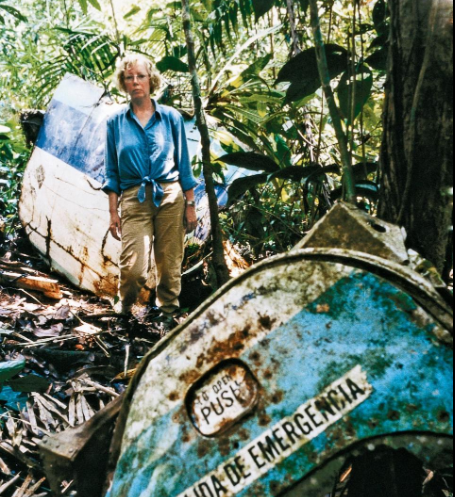
Fortunately, she remembered advice from her father, a biologist who had worked in the Amazon: follow waterways, because people and settlements were more likely to be found near them.
Koepcke followed a stream downstream for approximately 10 days, eating what she could find and using her knowledge of the rainforest to avoid dangerous situations. Eventually, she discovered a small shelter used by local lumber workers.
On the 11th day, the workers returned, found her, and helped arrange her rescue.
Koepcke later recovered and became a biologist specializing in bats, eventually earning a doctorate.
Her survival is extraordinary not simply because she survived an aircraft breakup and enormous fall—but because she then kept herself alive alone in one of the world’s most challenging environments for 11 days.