
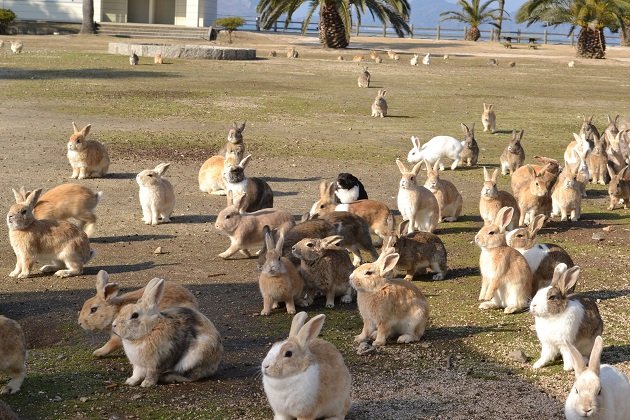
Just a short ferry ride from Hiroshima, Japan, lies Ōkunoshima, a tiny island better known around the world as Rabbit Island. Today, hundreds of friendly rabbits roam freely across its walking trails, beaches, and forests, eagerly approaching visitors in search of food. Their fearless behavior has turned the island into one of Japan’s most unusual tourist attractions, drawing animal lovers and photographers from around the globe.
But beneath its adorable reputation lies a much darker history.
During the 1930s and World War II, Ōkunoshima was home to a highly secretive Japanese military facility that manufactured mustard gas and other chemical weapons. The operation was so secret that the island was reportedly removed from some maps to conceal its existence. Thousands of tons of poison gas were produced there and later used during Japan’s military campaigns in Asia.
After the war, Allied forces dismantled the factory and destroyed much of the evidence. Today, visitors can explore the Ōkunoshima Poison Gas Museum, which documents this little-known chapter of history and the devastating effects of chemical warfare.
The exact origin of the island’s rabbit population remains debated. One popular theory claims laboratory rabbits were released after the war, while another suggests a small group of domestic rabbits was introduced in the 1970s and multiplied rapidly. With no natural predators and a protected environment, the population flourished.