
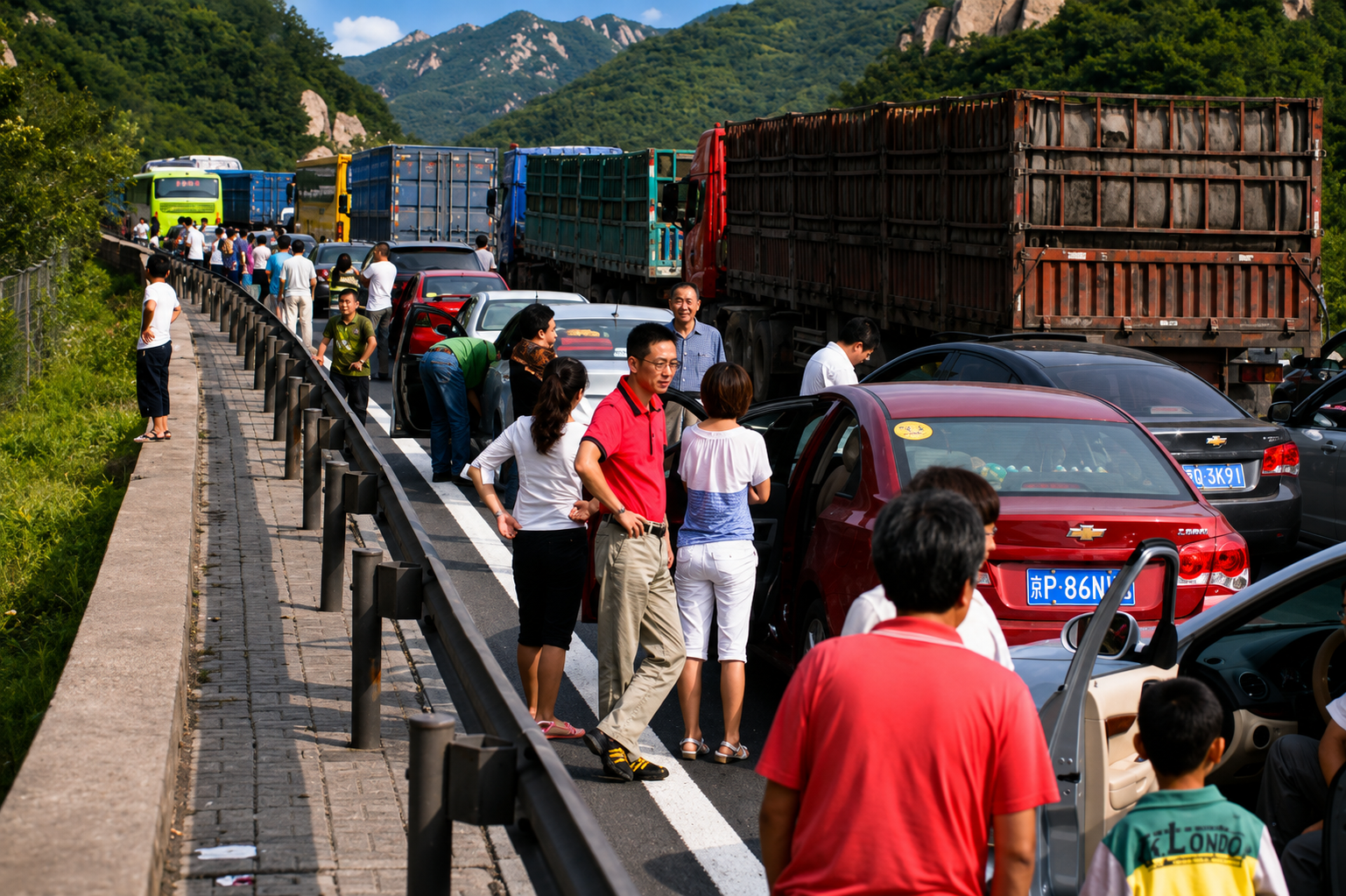
In August 2010, a massive traffic jam developed on China National Highway 110, northwest of Beijing. The congestion was caused by a combination of heavy truck traffic, road construction, and a surge of vehicles returning from holiday travel.
The backup stretched for about 100 kilometers (62 miles), making it one of the longest traffic jams ever recorded. At its worst, some motorists advanced less than one kilometer (0.6 miles) per day, spending days trapped in their vehicles.
As the gridlock continued, local residents took advantage of the situation by setting up makeshift roadside stalls selling food, bottled water, instant noodles, and other necessities to stranded drivers. Reports noted that prices often rose well above normal because of the extraordinary demand.
The congestion persisted for around 12 days, finally easing as traffic management measures were introduced and road conditions improved.
The event remains one of the most remarkable traffic jams in modern history and is frequently cited as an example of how infrastructure bottlenecks, construction, and heavy freight traffic can combine to bring transportation networks to a standstill.